
The king and his men marched to Jerusalem to attack the Jebusites, who lived there. The Jebusites said to David, “You will not get in here; even the blind and the lame can ward you off.” They thought, “David cannot get in here.” 7 Nevertheless, David captured the fortress of Zion—which is the City of David. (2 Samuel 5:6-7)
Today, the City of David is an archaeological site and national park. It sits on a narrow ridge just south of the Temple Mount, a short walk from the Western Wall through the Dung Gate. This fascinating site is often requested in our custom Israel tours.
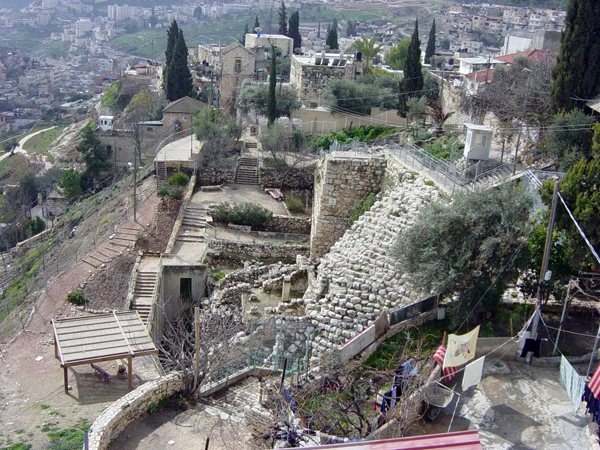
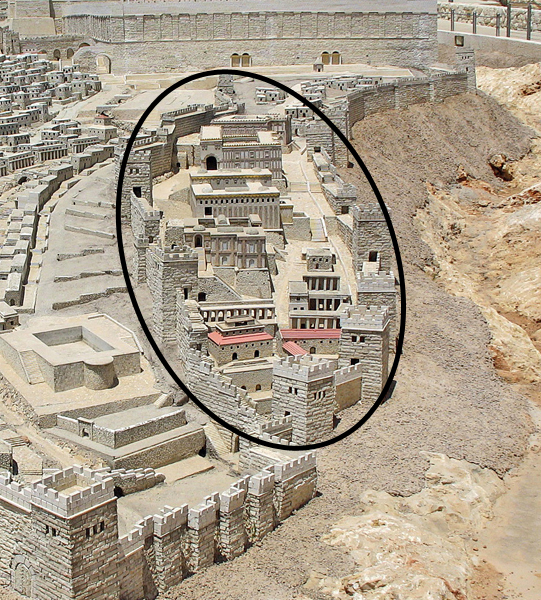
The site may have been permanently settled by Canaanites as early as the 3rd millennium BCE. The 3,800 year old Spring Citadel is a Canaanite fortress built outside the eastern wall to protect the Gihon Spring, the city’s main source of water. This is the largest known Canaanite fortress in Israel, with walls 23 feet thick surrounding the spring. It is believed to be the “fortress of Zion” taken by David to conquer the city in 1004 BCE.
It was only discovered in 1995 and opened to the public in 2014 after 17 years of excavation. King David made the city his capital and proceeded to unite the people of Israel for the first time. David’s son King Solomon extended the city to include the Temple Mount and built the First Temple there.
Begin the tour of the City of David at the visitor center, where you can view a 16-minute, 3-D film showing the city as it looked in its prime.
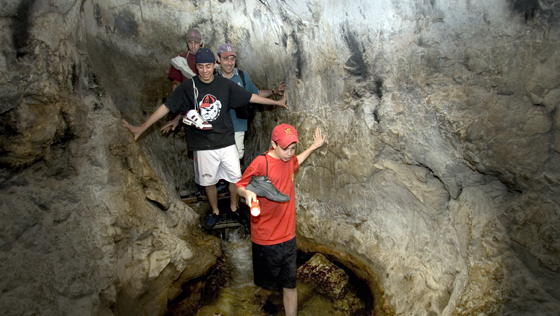
Then, if you’re not claustrophobic, explore the tunnels of the city. There’s the Canaanite tunnel, which most archaeologists date to the 18th century BCE, around the same time the Spring Fortress and other fortifications were built. Warren’s Shaft, discovered in the 19th century by Sir Charles Warren, is a 40-foot vertical piece of the Canaanite water system that may have been used by David’s army to enter the city.
Hezekiah’s tunnel, also known as the Tunnel of Siloam or Shiloh, is a later addition built in the early 8th century BCE on the orders of King Hezekiah. Its purpose was to join the Gihon Spring to the city, so it would have an internal water source during the Assyrian siege.
Water still runs through this tunnel today, about 2 feet deep. If you don’t mind wading, it’s a fascinating walk. So sophisticated were their calculations, diggers started on either end and met within millimeters of each other in the middle. You can still see in the tunnel where they marked the meeting point. The tunnel connects the Gihon Spring, which lies outside the city walls, to the Siloam Pool inside the walls. In the winter, we usually bypass this tunnel because the water is quite cold and can be too deep.
Add the City of David to any of our published private Israel tours or custom programs.


Leave a Reply