
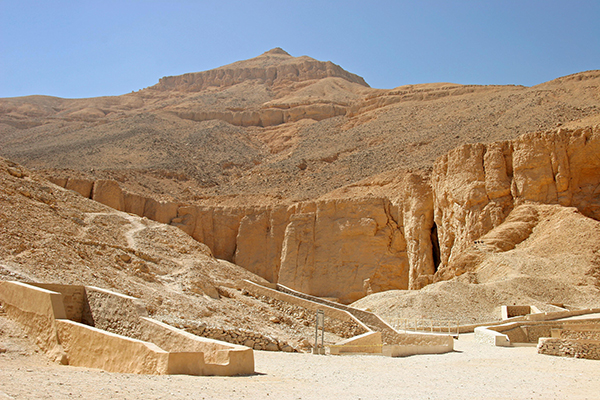
Across the Nile from the city of Luxor (ancient Thebes) in Upper Egypt, about 300 miles south of Cairo, desert mountains conceal a New Kingdom necropolis containing the tombs of pharaohs and the noble class. To date, 62 tombs have been discovered, ranging in size from a single chamber to sprawling networks of passageways with over 100 chambers. Most of our published Egypt tours include a visit to this must-see site.
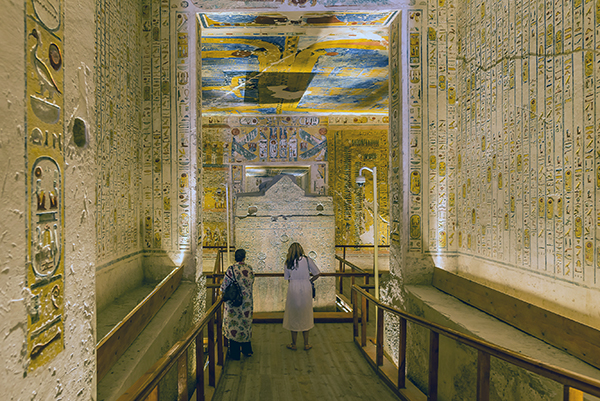
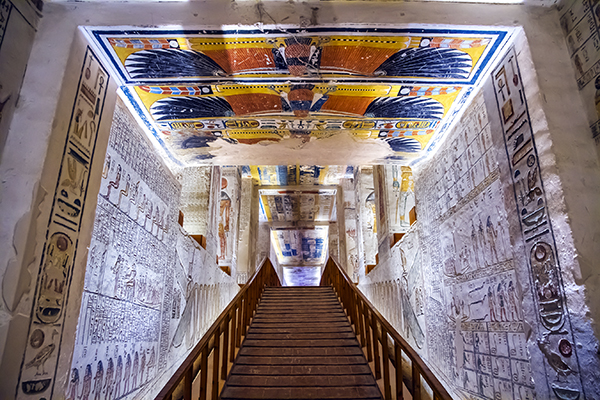
Inside the tombs, walls and ceilings are covered in scenes from the life of the pharaoh, happy experiences that he would like to carry with him into the afterlife, as well as prayers and spells to help ensure that he reached his eternal destination.
Ancient Egyptians believed they would live on after death in an idealized version of the life they had known. They were buried with all the furnishings and fixtures of their life because they would need them. To protect from tomb raiders, this necropolis was established in a remote spot. Tombs were cut deep into the mountains and constructed in complicated layouts, with the valuables stashed in the deepest, most out-of-the-way crevice. Despite these precautions, very few tombs survived to the modern age in tact. The tomb of Tutankhamun is the most famous exception. King Tut’s tomb can be visited in the necropolis and the tomb treasures can be seen at the Museum of Egyptian Antiquities in Cairo (and, once it opens, the new Grand Egyptian Museum).
Can you name that site?


Leave a Reply