
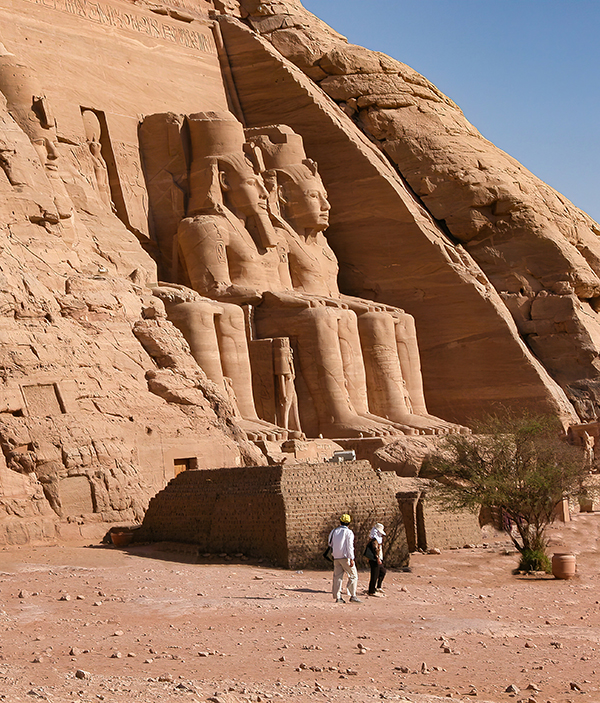
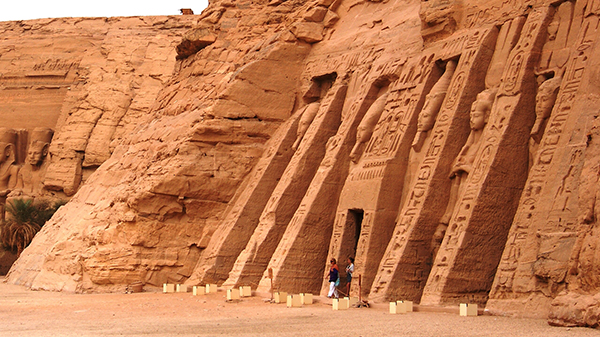
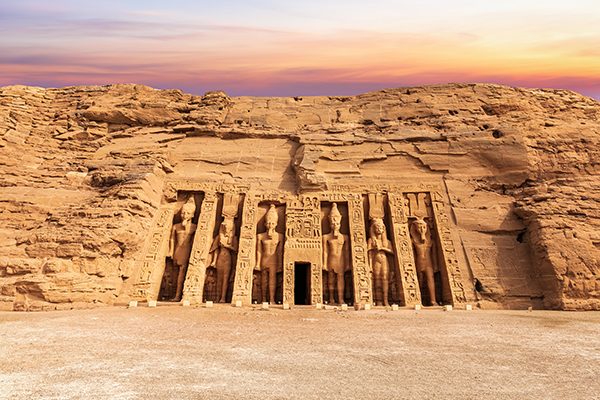
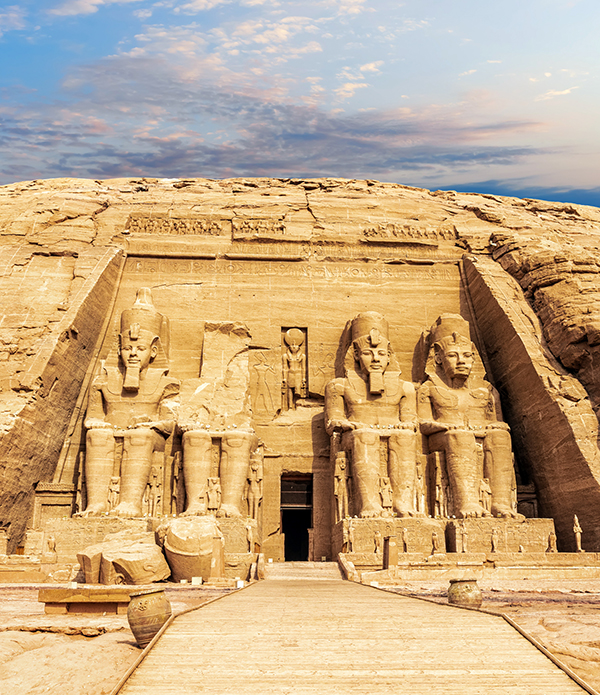
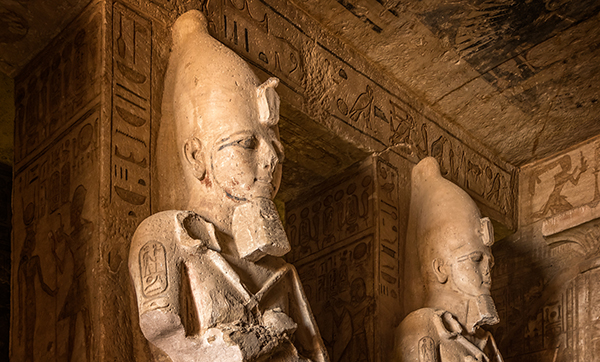
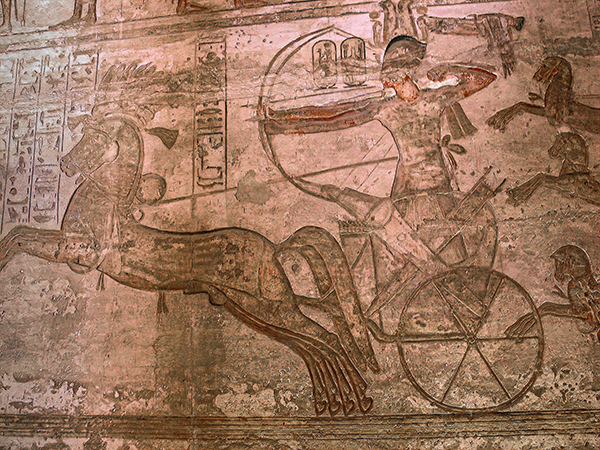
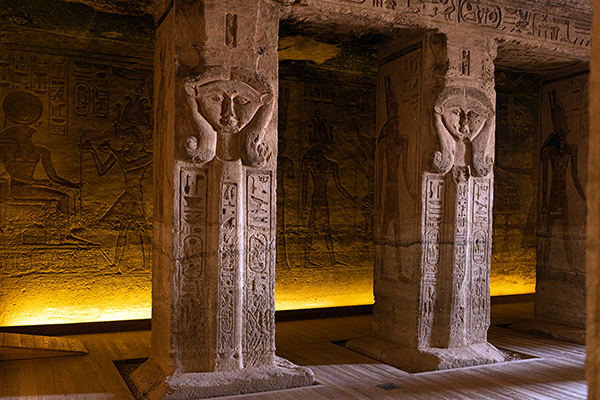
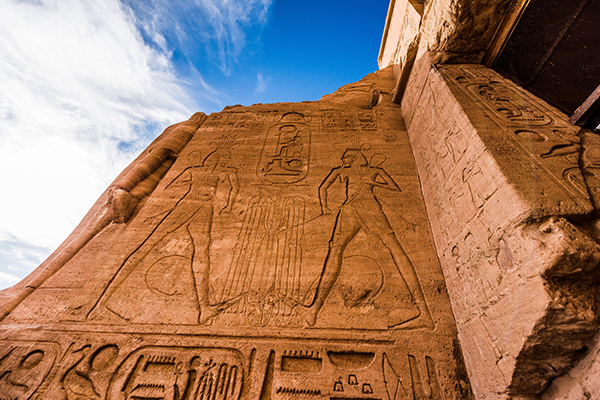
Rising out of a stark landscape near the remote, southern border of Egypt, the temples at Abu Simbel are uniquely striking. The Great pharaoh Ramses II had the two grand Abu Simbel temples built on his southern frontier to demonstrate his might and celebrate it, a clear deterrence to would-be invaders.
Ramses II was one of the longest reigning pharaohs and a prolific builder throughout his approximately 66 years in power. The temples at Abu Simbel are widely considered to be his greatest architectural achievement.
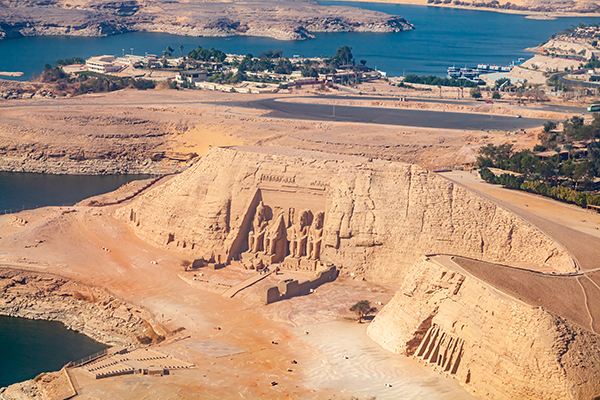
When the Aswan High Dam was built in the 1960s, many monuments in Nubian Egypt, that is south of Aswan, were threatened by inundation. Mobilized by UNESCO, an international community of specialists came together to rescue this priceless world heritage. Beginning in 1963, the Abu Simbel temples were cut into over 1,000, multi-ton pieces and reassembled on higher ground. The new site, complete with an artificial mountain facade, reopened in 1968.
Abu Simbel is usually visited as a daytrip or half-day trip from Aswan, 290km to the north. Other than a small airport and the temples, there’s not much there.
Visitors can fly between Aswan and Abu Simbel, about 45 minutes one way, or hire a car, 3 hours one way.
Browse our Egypt programs that include Abu Simbel.


Leave a Reply