
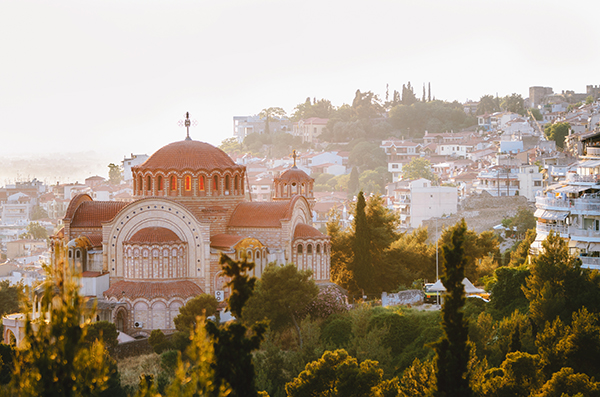
If you are craving a wholesome, picturesque getaway in 2024, consider the serene vistas and sunny people of Greece. Few nations can claim to be as beautiful or as remarkable. Greece is a welcoming, safe, and memorable destination for smitten couples, entire families, and solo adventurers alike. Whether you are a first timer or an experienced Graecophile, there is always more to eat, discover, and enjoy in the Ancient Land of Gods.
While most tourists visit Athens and the Greek islands, the second biggest city in Greece – considered the cultural and entertainment capital of the country – is often left off of newcomers’ travel itineraries. However, it turns out you don’t have to go to Italy, India, and Bali to have your very own Eat, Pray, Love movie experience – you just have to go to Thessaloniki!
DINING IN THE CO-CAPITAL
Archestratus, Greek poet and “Father of Gastronomy,” is credited with writing the first ever cookbook c. 330 BCE. The “cookbook” was actually a humorous poem that made important disclosures about ancient Greek cuisine.
Today Greece has one of the healthiest, most iconic culinary cultures in the world. Travelers will find a wealth of locally made wines, cheeses, honey (considered some of the best in the world), and of course, olive oil – the primary source of fat in the ancient Greek diet and a key driver of trade and cultural exchange throughout the ancient world. In fact, the name of a popular pedestrianized quarter in Thessaloniki is Ladadika, meaning “shops that sell oil and its products.”
While in Thessaloniki, don’t settle for a traditional Greek “breakfast” of coffee and a cigarette. Thessaloniki is the spiritual home of delicious bougatsa, and many bougatsarias still make the dough for this sweet and flaky breakfast pastry by hand. Originally from Asia Minor (Turkey), bougatsa is a great example of Greece’s distinctive fusion cuisine.
“Thessaloniki has for centuries been a crossroads of flavors and cultures… from Sephardic Jews fleeing the Spanish Inquisition to Armenian and Arab traders, Slavs and Greeks from poorer rural areas, refugees from Asia Minor, Greeks from the Black Sea and other migrants from everywhere in the Balkans. Each of these groups has added its own ingredients, recipes, and influences to the city’s gastronomic melting pot.”1
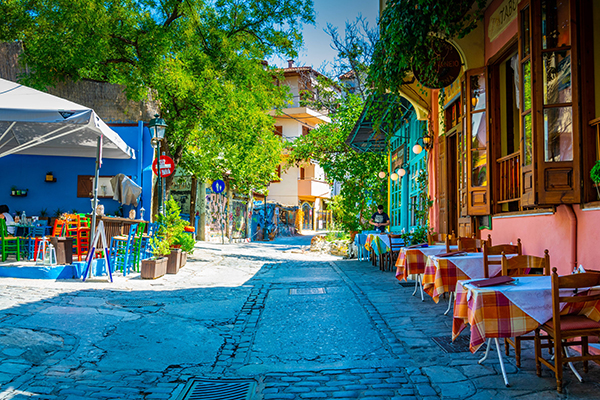
Although meat was scarce in the ancient Greek diet, fresh seafood was preferred and abundant; nowadays you can enjoy seafood just as fresh and plentiful, expertly roasted, grilled, or steamed with aromatic herbs – or you can indulge in local dishes of lamb and kid.
When it comes to dessert, you don’t have to look far in Thessaloniki. Greek American chef and television host Diane Kochilas stated: “Cosmopolitan Thessaloniki is also known admiringly by its locals as the ‘sweet mother’, thanks to its longstanding pastry tradition. Almost everywhere you turn, there is a shop selling syropiasta in every shape and size; some of Greece’s leading pastry dynasties hail from Thessaloniki.”
Check out a glimpse of the annual Thessaloniki Street Food Festival here!
PRAYING IN THE CITY OF SAINTS
“Although a Homeric hero will often call upon the gods, the humorous cynicism displayed in their treatment is another reflection of the attitude which, for all their love of religious festivals, the Ionians adopted and later carried on into their philosophical systems.” -Michael Grant, The Ancient Mediterranean
Walking along the Thermaic Gulf in Thessaloniki, the City of Saints, you can see Mount Olympus across the water – just a short day-trip away. There is archaeological evidence of religious pilgrimages to the summit in ancient times. Plutarch even cited sacrificial ashes and writings found there intact as “proof” that the highest mountains on earth reach above the wind and rain.
Though famous as the home of the gods in Greek mythology, Mt. Olympus also hosts several Christian monuments and monasteries. Greece is well-known for widespread observance of Eastern Orthodoxy. Paul the Apostle visited Thessaloniki’s chief synagogue and paved the way for the city’s first Christian church; two of Paul’s letters to the church are part of the Christian Biblical canon. Some scholars even claim that the First Epistle to the Thessalonians was the first book in the New Testament to be written.
Lesser known is the fact that the Jewish population in Greece is the oldest in mainland Europe, and Thessaloniki is the only city in Europe where Jews once made up the majority of the population. “Unbeknown to many visitors, Thessaloniki was once home to Europe’s biggest Jewish community. Sephardic Jews arrived in the city following their expulsion from Spain in 1492, with their influence so significant that Thessaloniki would be nicknamed La madre de Israel in the Judeo-Spanish language Ladino.”2
The Monastiriotes synagogue in Thessaloniki, designed by a Czech Jewish architect in 1927 and funded by families that immigrated to Thessaloniki from Tunisia, was the synagogue where a small number of Jewish survivors of the Holocaust held their first meetings after World War II. Thessaloniki had lost 96 percent of its Jews; it had also lost an ancient Jewish cemetery, nearly sixty synagogues, libraries, and Midrashim (traditional, sometimes ancient Rabbinical commentaries on Hebrew Scripture) – all destroyed by Nazis. A historic restoration of the synagogue was completed in 2016, and Jewish tourism in Thessaloniki is still growing.
Tourists of all creeds can experience a variety of religious festivals throughout the year in Greece, such as the festival of light or Epiphany, Apokries or Carnival – even the ancient August Moon Festival. Easter and Christmas are also celebrated with major festivals throughout the country. Thessaloniki hosts a local festival called Dimitria, inspired by the Byzantine-era trade fair of the same name (the patron saint of Thessaloniki is Saint Dimitrios).
“THESSALONIKI – THE CITY WITH MANY NAMES AND ONE BIG HEART”3
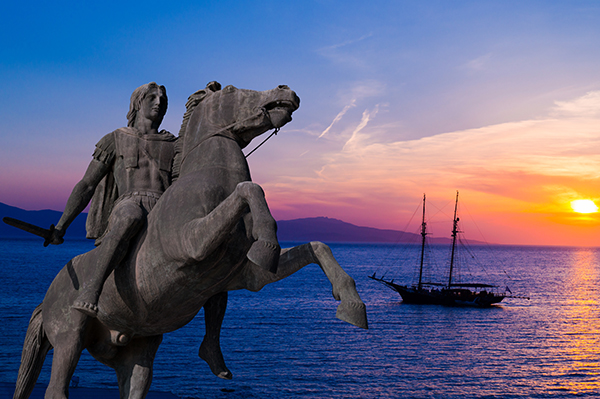
“Happy is the man, I thought, who, before dying, has the good fortune to sail the Aegean sea.” -Nikos Kazantzakis, Zorba the Greek
Whether you travel alone or with company, treat yourself in timeless, romantic Greece. If you make it to Thessaloniki, be sure to enjoy a sunset cruise, a horse-drawn carriage ride through Aristotle Square, scenic 360-degree views of the Thermaic Gulf from atop the famous White Tower, a resort stay at the nearby Pozar thermal springs, or just a peaceful walk along the historic waterfront. And if you’re feeling adventurous, stop by a Turkish hammam like the historic Ottoman-era “Baths of Paradise”. Ya’lla!


Leave a Reply