
Exactly fifty years before the recent outbreak of war in Israel-Palestine, which the world witnessed over the weekend, a similarly shocking attack on Israel dramatically altered the landscape of the Cold War.
It was 1973, and it was Yom Kippur, the holiest day of the Jewish year. The president of Egypt, Anwar Sadat, ordered his military forces across ceasefire lines to overtake the Israeli-occupied Sinai Peninsula. Sadat was prepared to “sacrifice a million Egyptian soldiers” over territory lost less than a decade before.
The blasphemous attack stunned the Jews. Even the top brass of the United States was taken by surprise; Defense Secretary Robert Gates was actually “briefing an American arms negotiator on the improbability of armed conflict in the region” when “he heard the news…on the radio.” Thus began a month of bloodshed known as the October War, or the Yom Kippur War.
In the end, the Camp David Accords – the product of secret negotiations led by the United States – required that Israel cede the Sinai Peninsula to Egypt, which Egypt maintains to this day. The Peninsula, a stretch of land connecting North Africa & the Mediterranean to Asia & the Red Sea, is now a thriving tourist destination, featuring scuba diving and beach resorts in addition to ancient marvels like Mt. Sinai and St. Catherine’s monastery.
Perhaps more importantly, the Accords marked the first instance of an Arab country recognizing Israel as a legitimate state – a consequential position that Egypt holds despite strident opposition in the Arab world. Ya’lla Tours, the first tour company in Israel to serve Egypt, commemorates half a century of peace between Israel and her oldest neighbor. In fact, our Ya’lla patriarchs call these ancient nations home.


Stills from Rick Steves’ Egypt: Yesterday and Today
However, the tragic attacks on civilians in Israel-Palestine are an unfortunate reminder that peace is still hard won in the 21st century, just as it was in the ancient world. The religious and political passions that animate the Near East today are no less marked than they were thousands of years ago. As we have seen, Israel – a nation of unparalleled historical significance – is still fighting for its very existence, fifty years after the casualties and concessions of the October War.
Everyday clashes of East and West, secular and religious, science and art are what make Ya’lla destinations so worthy of experiencing firsthand. Looking ahead to the holiday season and to 2024, our priority is still the highest standard of safety and comfort for our travelers; we will continue to monitor current events and adjust accordingly. As a boutique, custom tour operator, flexibility is integral to our brand.
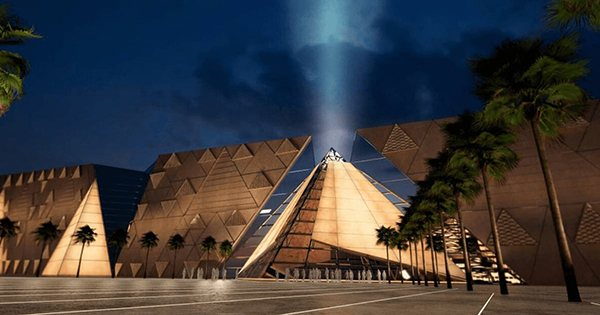
God willing, the coming months and years will be grand ones for Egypt, and for the Ya’lla family. As soon as next month, the highly anticipated Grand Egyptian Museum will finally be open to the public. The G.E.M. sits at a short distance from the only remaining wonder of the ancient world, the Pyramids of Giza, and will be the largest archaeological museum complex in the world.
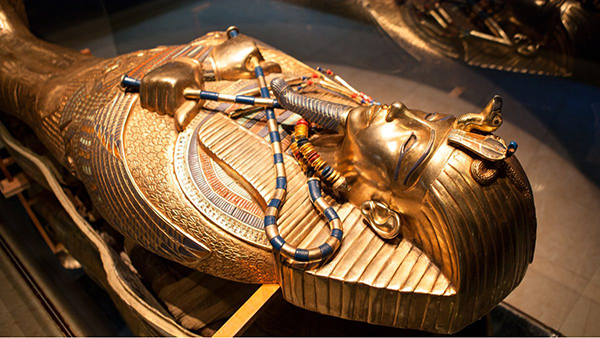

The massive museum will accommodate 100,000 artifacts, including the first ever exhibition of the full tomb collection of King Tutankhamun, the Khufu ship, and a colossal statue of Ramses II. And the G.E.M. is just one of the monumental domestic projects undertaken by Egypt’s government under President Abdel Fattah El-Sisi.
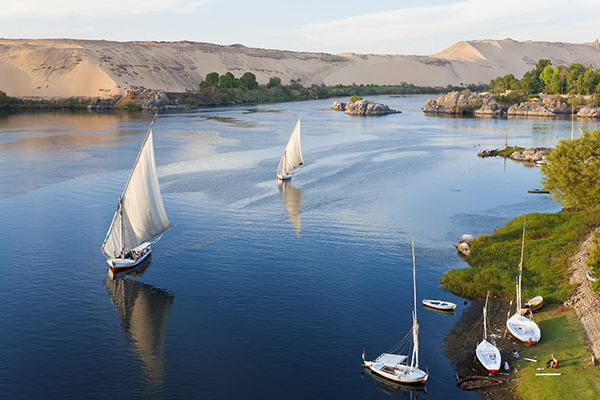
Last month, at a three-day conference in the New Capital, the Egyptian Minister of Transport discussed the major high-speed rail under construction, dubbed the “land Suez Canal.” The Minister said that for the first time, a high-speed rail will reach all the way south to Aswan and beyond to ancient Abu Simbel, 280km further south. In the near future, traveling from fast-paced, modern Cairo – with its shopping, nightlife and crowds – to the last major port on the Nile – with its islands, drifting feluccas and traditional Nubian village life – will be easier, faster, and more affordable than ever.
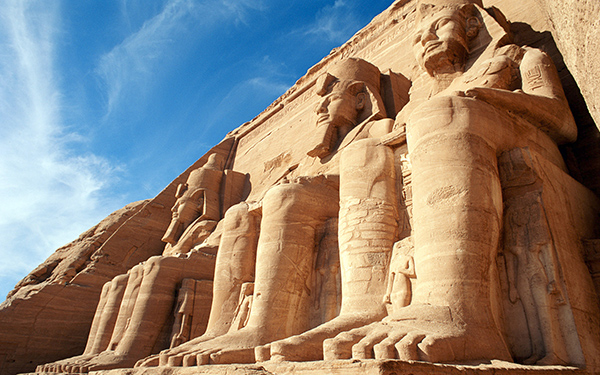
However you get to Aswan and the land of ancient Nubia, be sure to visit the temple of Abu Simbel, a Ya’lla family favorite. The Holy of Holies depicts Rames II among the gods and was designed in such a way that the inner chambers are illuminated just twice a year. Some believe this rare phenomenon was designed by the Egyptians to signal the beginnings of the agricultural and harvest seasons, while others believe it coincides with the birth of Ramses and his ascension to the throne. Either way, this striking phenomenon has been happening for over three thousand years.
Astoundingly, the temple – cut from sandstone – was nearly lost under the waters of man-made Lake Nasser in the sixties. Development of the High Dam in Aswan was to cause a great build-up of water, submerging many ancient sites nearby including Abu Simbel. Fortunately, international outcry led to the temple being completely relocated, a feat considered to be one of the greatest works in archaeological engineering.
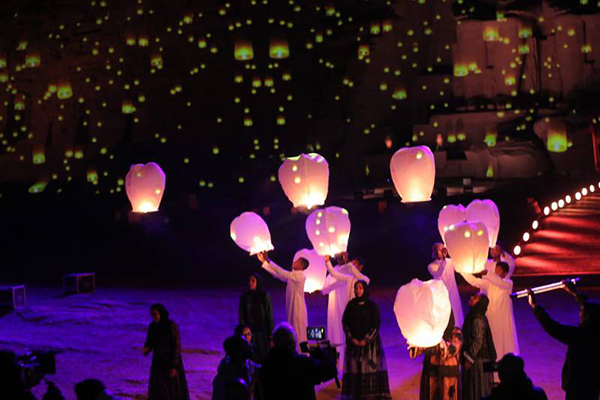
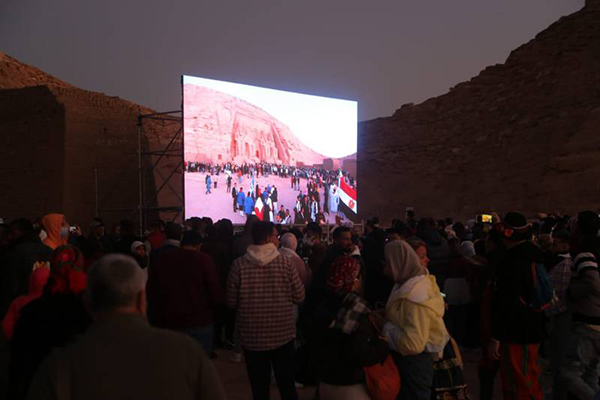
Thanks to remarkable ingenuity, both in antiquity and in the modern world, today Abu Simbel still aligns with the sun precisely the way its architects intended. Every year in February and October, tourists and Egyptians alike flock to the site in the early morning for the biannual Sun Festival, to see the inner statues of Ra (the Egyptian sun god) and Amun (the Egyptian god of gods) illuminated by the morning light. After the spectacle, visitors enjoy koshari and take part in traditional Nubian song and dance. Ya’lla!


Leave a Reply