
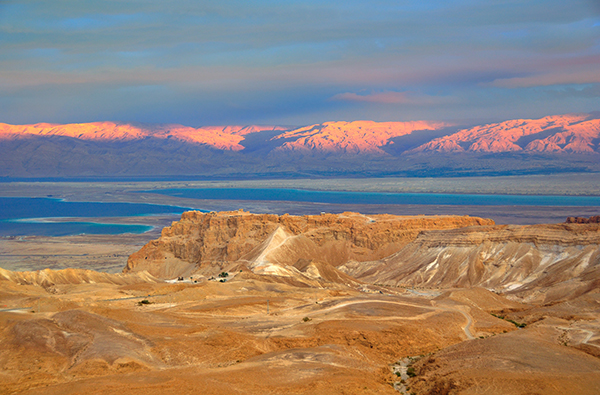
This site makes an easy excursion from Jerusalem, less than an hour away, and is usually combined with a float and mud-bath at the Dead Sea. Here are just a few of our Israel tours that include this site: Jerusalem Stopover, Israel Highlights, Glory of Israel.
Herod the Great took advantage of this isolated plateau to build one of his eight desert retreats. The palace and store houses on top were made to withstand a long siege. During the first Jewish rebellion against Rome in 66-73 CE, the natural fortress became a refuge for some groups of resisters, especially after the sack of Jerusalem in 70 CE. In 72-73 CE, the Romans laid siege to the fortress for several months, about as long as it took them to build a ramp from the desert floor to the top of the plateau. The ramp and remains of the Roman camp are still there. According to the ancient Jewish historian Josephus, the Romans found the bodies of 1,000 inhabitants, men, women and children, who had committed suicide. Archaeologists have found the remains of only 28 men, so Josephus may have taken some poetic license. No matter the number of heroic victims, the story came to symbolize Jewish defiance and resilience in the face of suppression, as well as the loss of the Jewish homeland.
Can you name that site?


Leave a Reply