
Among our published Israel tours, a visit to Dominus Flevit is included in our two Christian pilgrimage tours: Journey of Faith and Dan to Beersheva.
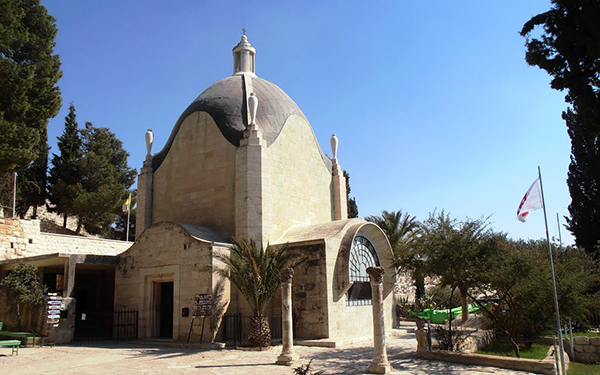
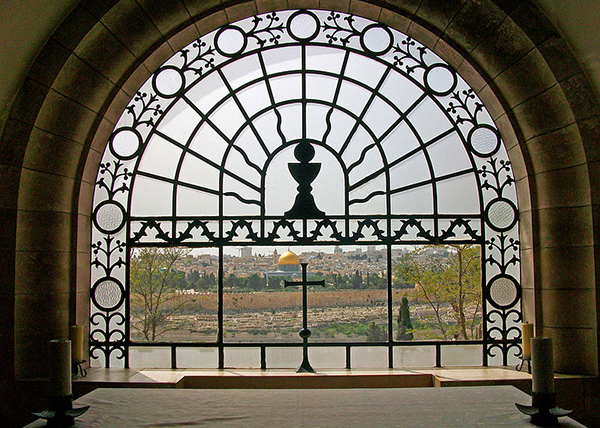
The Dominus Flevit Church stands on the western slope of the Mount of Olives looking out at the panorama of the walled Old City of Jerusalem and the Temple Mount, as Jesus did on the first Palm Sunday.
Dominus Flevit means “the Lord wept” in Latin and refers to the tears Jesus shed at his vision of the future destruction of Jerusalem, which came to pass at the hands of Rome in 70AD.
37 When he came near the place where the road goes down the Mount of Olives, the whole crowd of disciples began joyfully to praise God in loud voices for all the miracles they had seen:
38 “Blessed is the king who comes in the name of the Lord!”
“Peace in heaven and glory in the highest!”
39 Some of the Pharisees in the crowd said to Jesus, “Teacher, rebuke your disciples!”
40 “I tell you,” he replied, “if they keep quiet, the stones will cry out.”
41 As he approached Jerusalem and saw the city, he wept over it 42 and said, “If you, even you, had only known on this day what would bring you peace—but now it is hidden from your eyes. 43 The days will come upon you when your enemies will build an embankment against you and encircle you and hem you in on every side. 44 They will dash you to the ground, you and the children within your walls. They will not leave one stone on another, because you did not recognize the time of God’s coming to you.” (Luke 19:37-44)
The 19th-century church stands on the site of a Byzantine church. Remains of that 7th-century church, as well as artefacts from a Canaanite settlement (approximately 1500 BCE) and the Second Temple period (late 6th century BCE to 70 CE) were found during construction 1953-1955. A mosaic floor from the Byzantine church was incorporated into the new church and tombs and other artefacts found during construction are housed there.
Italian architect Anton Barluzzin designed the church’s dome in the shape of a tear drop and placed a window behind the alter that perfectly frames the Temple Mount.


Leave a Reply