
So many Greek islands, so little time… Cyclades, Dodecanese, Sporades, Ionian…literally hundreds of islands, thousands if you count the uninhabited ones. Among the hundreds, Santorini island stands out for its explosive history and resulting dramatic scenery. The island as we know it is the caldera of a volcano which erupted in one of the largest explosions ever known on this planet around 1600 BCE. Ash and debris shot 25 miles into the stratosphere and the massive tsunami that followed brought immediate destruction and environmental devastation that lead to the extinction of the powerful Minoan civilization.
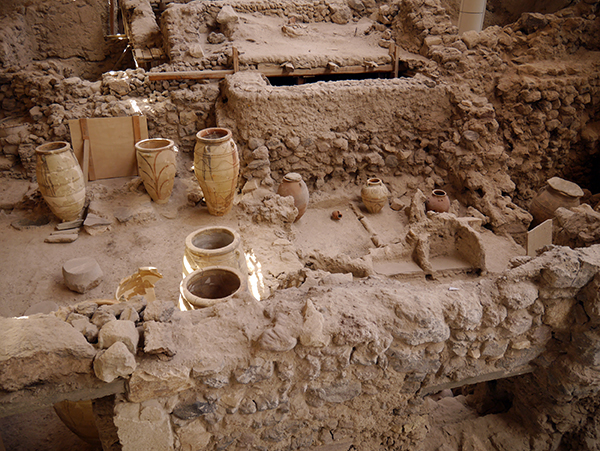
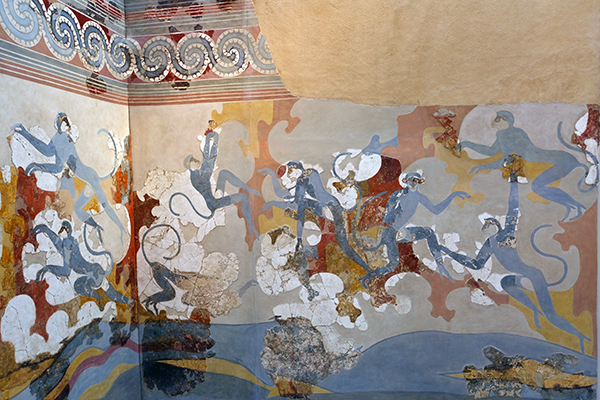
The Minoans were centered in Crete but their influence was widespread and they had colonies on a number of Aegean islands. On Santorini, the Minoan settlement of Akrotiri was preserved in volcanic ash, much like Pompeii. Unlike Pompeii, no human remains were found at Akrotiri, indicating the residents escaped. What remains is evidence of a wealthy, sophisticated city.
A powerful city that sank into the sea in a single day? Could it be Atlantis? Some, including scholars, think so. Visit Akrotiri and decide for yourself.
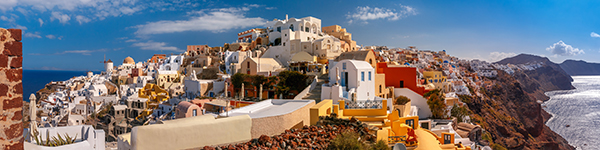
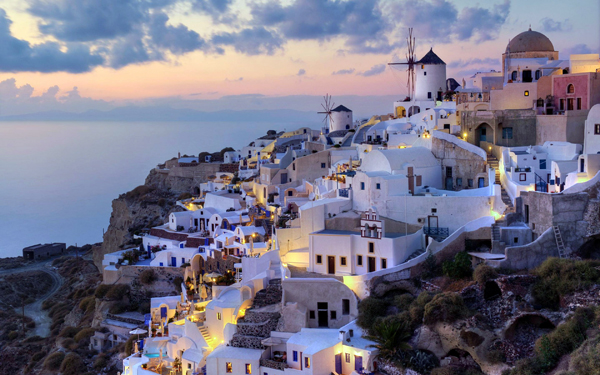
Despite an explosive history, Santorini is a very peaceful place, and thanks to its explosive history, Santorini is spectacularly scenic. Santorini is all about the views. You sit on your hotel terrace and look at the view, you eat your meals looking at the view. When walking around, you really must try to stop looking at the view and watch where you’re going because there are some pretty steep drops.
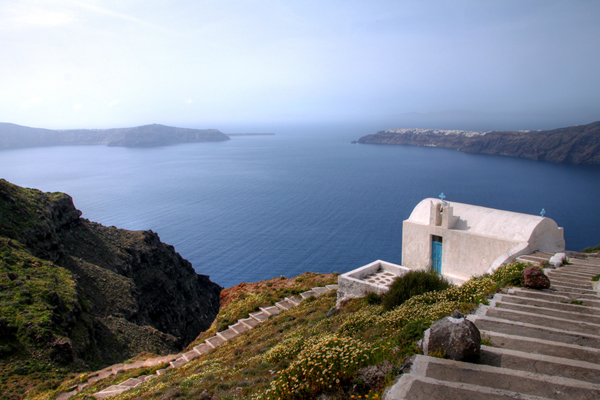
Most habitation is perched on the caldera rim, a sheer 1,000 feet over the sea. Fira is the main town, with the most happening. Oia is a little out of the way, quieter and more romantic. Imerovigli is closer to Fira but quiet and sits higher than either Fira or Oia, so claims superior views. Really, the views are good everywhere, as long as there’s nothing in the way.
For Greece tours that include Santorini, check out our island hopper and cruise programs.


Leave a Reply